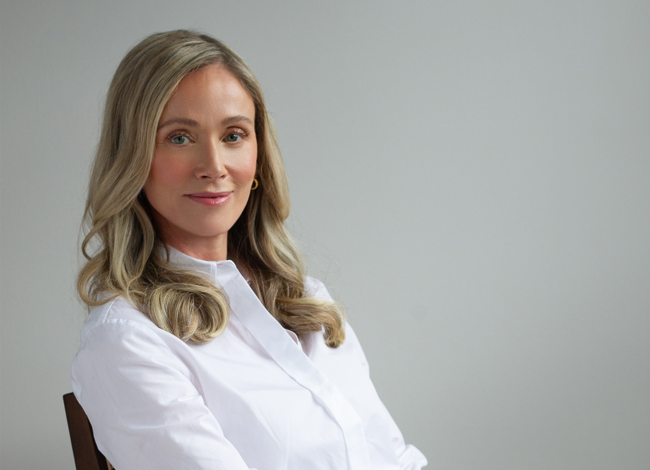
Tassan Sung: Why Storytelling Is at the Heart of SPOKEN
When we don’t tell our stories, others fill in the blanks. The SPOKEN founder opens up about the painful chapters she once kept hidden.
Reflection: On telling my own story, and why storytelling is at the heart of SPOKEN
The 2026 Women in Leadership event has me thinking about the power of storytelling.
While preparing my opening remarks, I told myself no one wanted to hear the painful parts of my story. The evening was about the panelists, not me, so I kept to the broad strokes.
Afterward, I heard again and again that people wanted more of my story and felt something was missing. I listened, but I didn’t really understand why it mattered until recently, when I met a woman whose life was almost the opposite of the one I had imagined for her.
She walked into our meeting looking like the picture of success: sharp, beautifully dressed, with every outward sign of pedigree and privilege. Then she shared her story, and nearly every assumption I’d made in those first few seconds turned out to be wrong. I was grateful she let me see what she had survived and how creatively she had built her life.
It was an uncomfortable realization. When we don’t tell our stories, others fill in the blanks. We all make quick judgments from surface cues. I had done it to her, and others have likely done it to me.
Starting SPOKEN is deeply personal. I want to amplify other people’s stories, but my own story is the reason I do this work.
I know I’ve had real advantages, including being born in Canada and the opportunities that came with it. I also know my teenage years were incredibly painful. I lived in and out of my home in an unstable family situation.
During those years, I swung between being the emotional caregiver for my mentally ill mother and trying to find some stability whenever I was pushed out of the house, which happened more than once. Her moods could shift violently. At her worst, she would pack my things into garbage bags, toss them onto the front lawn and tell me to leave.
But that was only one part of who she was. At her best, I could see flashes of an extraordinary woman. She was endlessly curious and could talk philosophy, biology and physics for hours. She was also a gifted artist. I believe that having children young, without money, and living under the expectations placed on women at the time left her feeling robbed of the artistic and intellectual life she had imagined. I can’t know exactly how she experienced those losses, but I could see how unfulfilled she felt.
When I was home, I was her sounding board and absorbed her pain. I worried about her safety, walked on eggshells to avoid the next confrontation and dreamed I could somehow make her well. Despite all the evidence, I held on to the belief that she could heal. I loved her, even when I was afraid of her.
My situation felt pitiable, but pity was the last thing I wanted. I wanted to be strong and accomplished, like the girls around me who seemed to have perfect families. Anyone who got close could see the chaos, but I spent enormous energy hiding it. I thought that if I looked like those girls, talked like them and didn’t make waves, I would “pass.” I often marvelled at how well I fooled everyone. Maybe I didn’t.
It hadn’t always been so frightening. Until I was 14, we lived in student family housing on the university endowment lands. For most of that time, our family of four lived in a 500-square-foot army barracks, later upgrading to 800 square feet. Money was tight while my father was in medical school, but the campus was a close-knit community. I was raised in daycare and by the families around us, and I walked to my first day of Grade 1 with a neighbouring family and spent my after-school hours at their home.
School was my happy place. I worked hard, found belonging in the classroom and eventually earned a spot at a small, academically selective high school. I was encouraged to write, and I dreamed of becoming a writer.
When my father opened his medical practice, we moved away from the campus and the school I loved. My mother’s mental health worsened, and my academic dreams began to fade. The weight of living with her illness while trying to find a way to support myself was overwhelming. My father was consumed by his work and believed fathers raised sons and mothers raised daughters. I was left to care for my mother and raise myself.
I loved my father, too, and by my mid-twenties we began building a relationship. Looking back, I can feel compassion for both my parents, for the lives they were trying to hold together and for what they couldn’t give me. That doesn’t change how alone I felt as their daughter.
My mother’s condition continued to decline. After one of her hospitalizations, the psychiatrist who discharged her told me plainly that there was nothing I could do for her and that I needed to protect myself.
I spent those years scanning for threats and searching for a life raft. My hands would shake, and my chest and throat would tighten until I could barely speak. Still, I worked in restaurants from the age of 16. Among the predators and drunk customers, one man offered to connect me with an agent for commercial work. Not long after, I saw a bus drive by with a photo of me smiling and holding a White Spot burger. I wished I could be as happy as the girl in that picture.
The agent brought a few more jobs, but they were sporadic and low-paying. I finished high school by correspondence while working, but by my late teens I was still in restaurants and still hadn’t found the financial security I needed. I rented a room in my brother’s university apartment and started an English Literature degree at UBC, hoping to become a writer or journalist. Living with my brother made me feel part of a family again, and school felt less frightening than the unknown.
As money ran out and restaurant shifts came and went, I grew angry at how much support other students seemed to have. In my fourth year, my father finally left my mother, and she had a major breakdown. She needed me, but I needed safety.
There was no single moment when everything fell apart. I had watched it coming for years. What changed was my urgent need to build a life that could secure my future. There was a lot I didn’t have, but I believed in my ability to learn and adapt.
So I chose one of the most opaque, intimidating and male-dominated industries I could find: finance. I had wanted to be a writer, but financial literacy and a career in finance looked like a life raft. I started as an assistant at a small Vancouver brokerage and began writing my licensing exams. Almost four years later, I was hired as an investment advisor at a bank-owned firm. By my early thirties, I was earning more than I’d ever imagined. I had found my life raft.
That was my first reinvention. They say necessity is the mother of invention. For me, it was the mother of reinvention.
I don’t tell this story often. Putting my past on display is emotionally draining, and I’d rather not revisit it. It’s also hard to write about my parents in a way that holds everything I feel: love, sadness for what they struggled with, and the pain of what I needed and didn’t receive. But meeting that businesswoman helped me understand what some guests felt was missing at Women in Leadership. They weren’t asking me to make the event about me. They wanted to understand what led me to create SPOKEN.
I know what it’s like to work hard at looking fine when you’re anything but. I also know how wrong our assumptions about each other can be. Stories, even ones very different from our own, help us see past those assumptions. They help us reflect on our own lives, form connections and build community.
That is the why of SPOKEN. I want to create space for people to speak honestly about the experiences that shaped them, and for the rest of us to listen. Sharing this makes me uncomfortable. It may be ancient history, but some days it still feels like yesterday. If I hope others will trust us with their stories, I need to be willing to share mine.
https://spoken-community.com/
https://www.linkedin.com/in/tassan-sung-411b21202/
@tassan_sung & @spoken.community
Nimi & Ruth, CultivatED Group
← Back to The GuidebookComments & Questions
Leave a comment or ask a question below.